Grand Challenge - AI4Life 鈣離子影像去噪競賽
在鈣離子成像中,研究人員拍到的影像幾乎一定含有大量雜訊,雜訊會讓真正的細胞活動訊號變得模糊、被誤判。鈣成像資料不是一張照片,而是空間和時間的維度。我們使用3D U-Net搭配nmODE,加強在時間維度的去噪能力。
競賽背景
Calcium Imaging (鈣離子成像)
螢光顯微鏡
基因編碼鈣指示劑(Genetically Encoded Calcium Indicators, GECIs)
觀察細胞中鈣濃度的變化,就能知道細胞的動作。
AI4Life
由歐盟 Horizon Europe 計畫資助的專案。專門為「光學顯微成像」與「生命科學」量身打造的「AI 工具資源庫」。
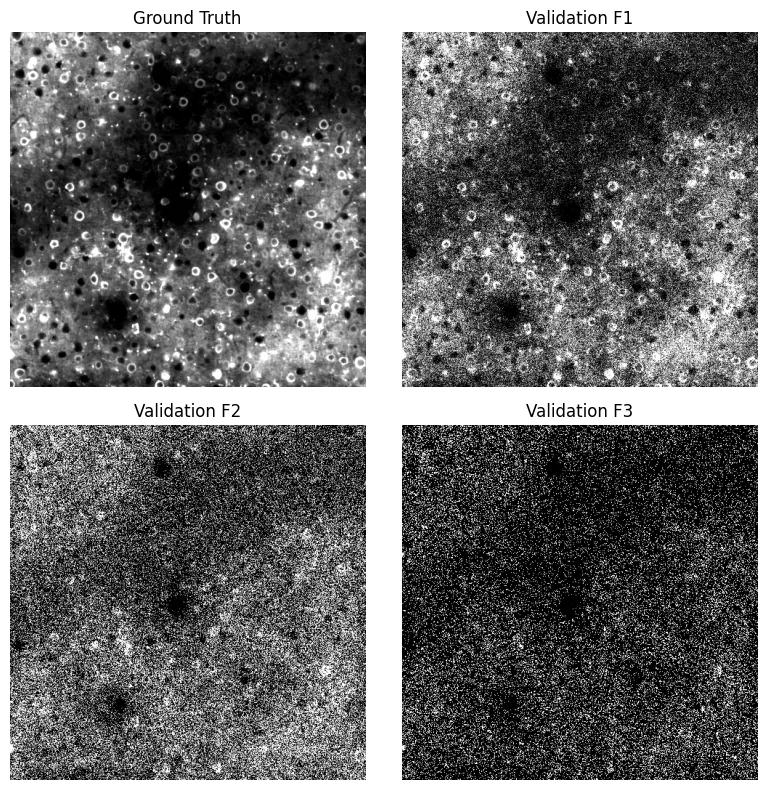
資料集
White: Higher brightness → Neuron is active
Black: Lower brightness → Background or inactive
Noise
Photon Counting (光子計數)
Dark Noise / Thermal Noise
去噪的目標就是讓「背景更黑(去除雜訊)」,同時讓「訊號的亮度變化(閃爍)」保持真實,不能因為去噪而讓原本該亮的點變暗。
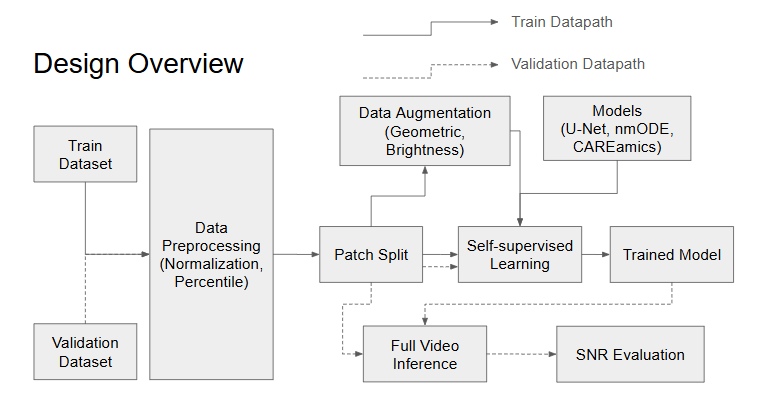
System Overview
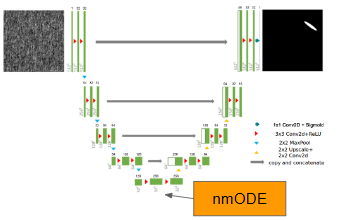
Temporal-Aware Solution: 3D U-Net & nmODE
We should aware the time relation. → 3D U-Net
3D → (time, height, width)
neural memory Ordinary Differential Equation (nmODE)
nmODE block location → after bottleneck
nmODE effect → 時間連續性記憶體
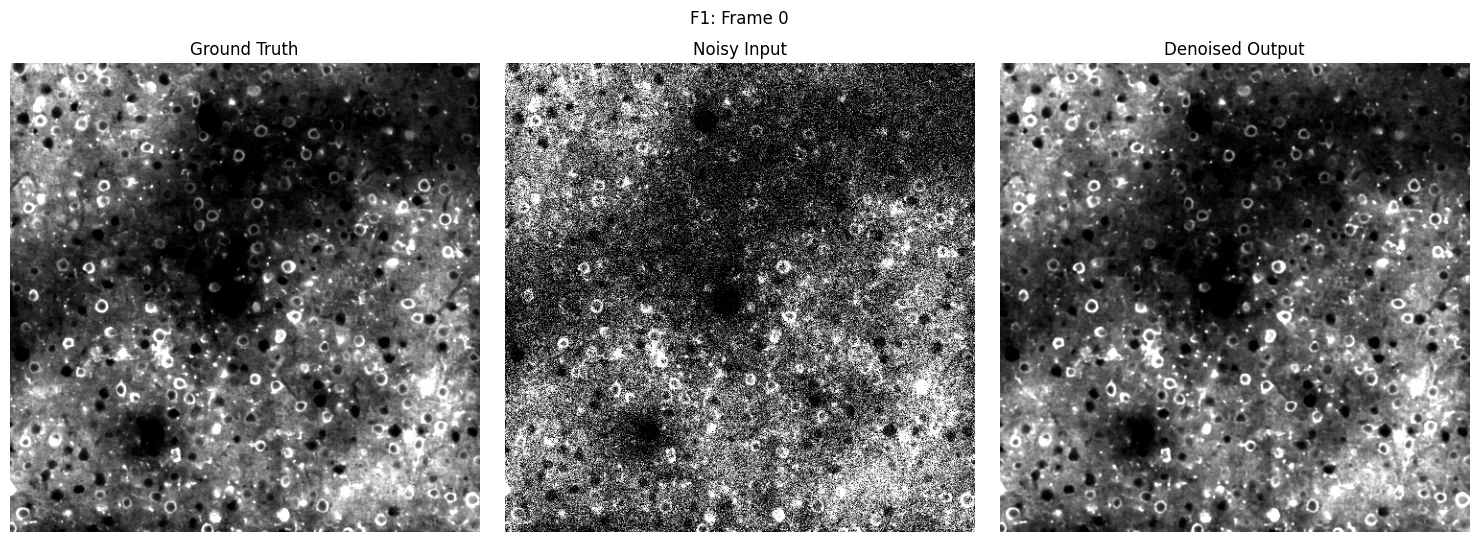
評估
不同雜訊程度的去噪DEMO
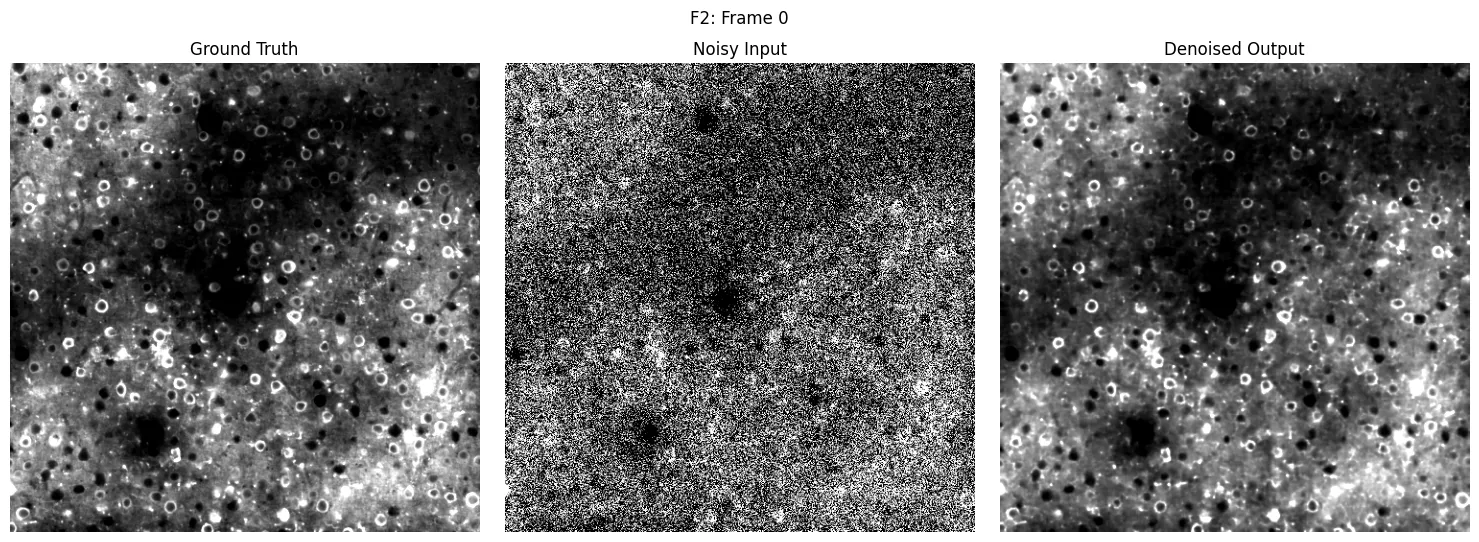
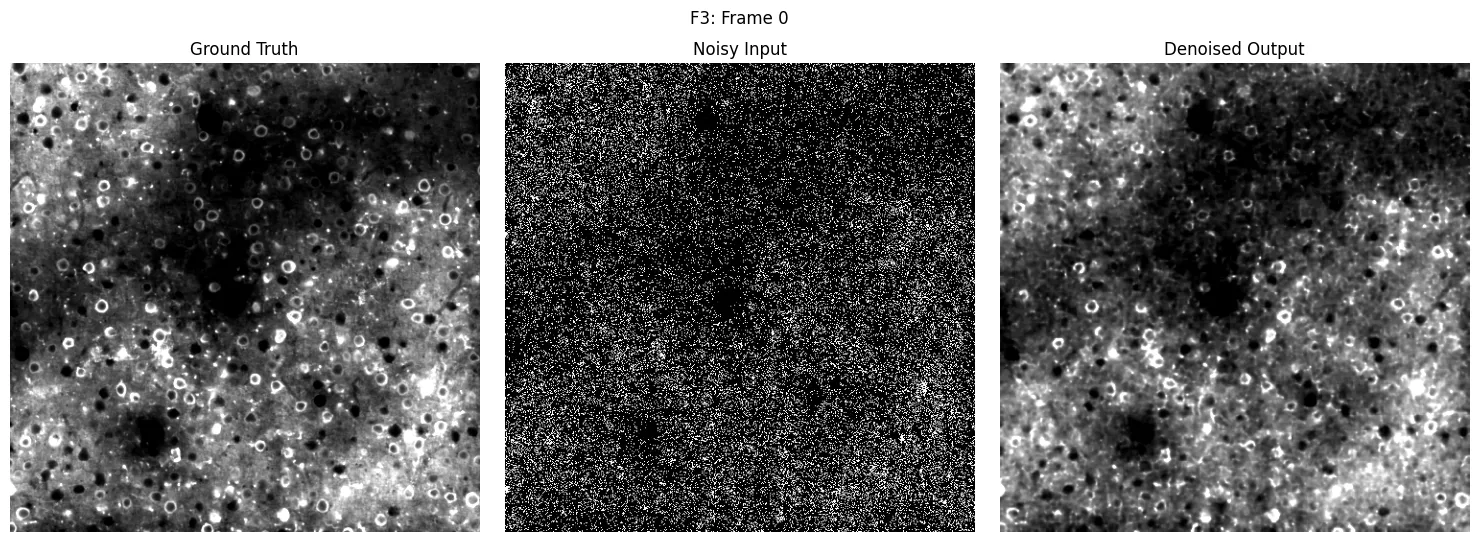
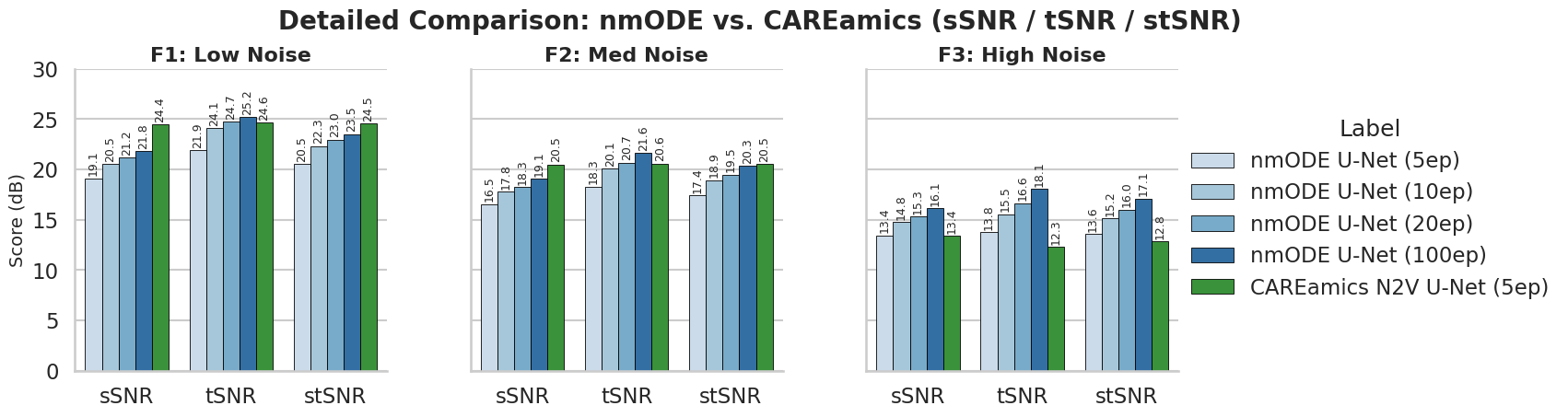
sSNR, tSNR, stSNR 比較
Signal-to-Noise Ratio (SNR)
Spatial SNR (sSNR)
Temporal SNR (tSNR)
Saptio-Temporal SNR (stSNR)
Final Score (avg stSNR)
結論
We applied nmODE U-Net to address the temporal instability in the Calcium Imaging Denoising Contest.
Our method nmODE U-Net is superior to CAREamics in terms of temporal stability (tSNR).
At the highest noise level (F3), all metrics (sSNR, tSNR, and stSNR) from nmODE U-Net are better than CAREamics.
In the future, we will submit our method to the official evaluation system to get a fair benchmark.
其他
Challenge Site: https://ai4life-cidc25.grand-challenge.org/
GitHub: https://github.com/jinwei-chang/grand-challenge-ai4life-cidc-2025
Lesson report slide: https://docs.google.com/presentation/d/195icUD73Jas9jiSPeVpV9p4xOArwPccEfVC_uVx8whE/edit?usp=sharing
Reference
[1] Yi, Z. nmODE: neural memory ordinary differential equation. Artif Intell Rev 56, 14403–14438 (2023). https://doi.org/10.1007/s10462-023-10496-2
[2] Chen, Ricky TQ, et al. "Neural ordinary differential equations." Advances in neural information processing systems 31 (2018).